Table of Contents
- What Are Ceramic Coatings?
- Benefits of Ceramic Coatings
- Application Process
- Maintenance Tips
- Common Misconceptions
- Ceramic Coatings vs. Other Protection Methods
- Choosing the Right Ceramic Coating
- Conclusion
Ceramic coatings have transformed how vehicle owners approach exterior protection, offering a high-tech shield against the elements. Unlike traditional waxes and sealants, ceramic coatings provide a chemically bonded layer that significantly increases surface durability while enhancing the vehicle’s visual appeal. These advanced coatings are the secret to maintaining a vehicle’s ‘just detailed’ look, even after years of ownership. If you live in an area with challenging weather, considering a Rockledge ceramic coating can provide peace of mind and keep your car looking its best for longer.
This innovative solution safeguards not just against cosmetic issues like fading and oxidation but also shields your vehicle from the daily onslaught of contaminants such as bird droppings, road salt, and tree sap. The unique chemical composition forms an invisible barrier that prevents water and dirt from clinging. As more car enthusiasts and everyday drivers become aware of these benefits, ceramic coatings have become a staple of vehicle care routines nationwide.
It’s more than just enhanced shine; ceramic coatings add a practical finish that’s resilient to the harshest elements, including UV exposure and chemical contaminants. The result is less time spent cleaning and more time enjoying a pristine vehicle. Navigating the world of ceramic coatings, however, can be complex—choosing the right product, understanding the application process, and knowing how to maintain the coating are crucial for every vehicle owner.
Compared with solutions like paint protection films, ceramic coatings offer a nearly invisible yet remarkably tough finish that not only preserves your paint but also elevates your vehicle’s overall appearance.
What Are Ceramic Coatings?
Ceramic coatings are advanced liquid polymers that are applied to a car’s painted surfaces. These coatings chemically bond with the factory paint, forming a semi-permanent transparent layer. This bond means the coating won’t simply wash away or break down in a few months as waxes do—instead, it offers years of robust protection, acting as a sacrificial layer against environmental damage.
Initially developed for industrial use, the technology behind ceramic coatings has evolved for the automotive world, making it accessible for car owners seeking long-term paint protection with a stunning finish. Their unique nanostructure not only repels water and dirt but also makes cleaning easier and less frequent, all while maintaining an immaculate, high-gloss shine.
Benefits of Ceramic Coatings
- Enhanced Durability: Modern ceramic coatings are formulated to withstand physical wear, resist abrasion, and withstand extreme environments. Unlike standard protectants, these chemical bonds allow coatings to last for years, minimizing the need for regular reapplication.
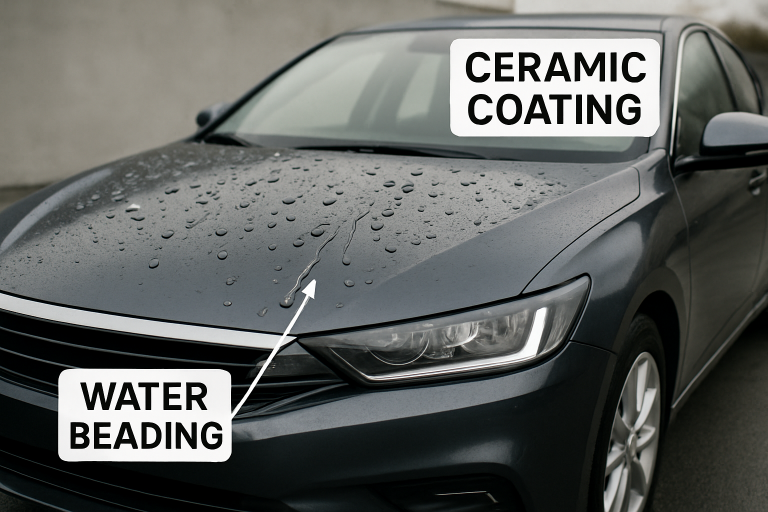
- Superior Hydrophobicity: Ceramic coatings exhibit exceptional hydrophobicity. Water beads up and quickly rolls off treated surfaces, taking dirt and contaminants with it. This keeps vehicles cleaner for longer periods—especially beneficial in rainy or humid climates.
- Advanced Chemical Resistance: With resistance to harsh chemicals like road salts, fuels, acidic rain, and even bugs or tree sap, ceramic coatings help maintain the paint’s integrity even in the most challenging driving environments.
- UV Ray Protection: Excessive sun exposure can cause paint oxidation and color fading. Ceramic coatings act as a UV shield, preserving the original vibrancy of your vehicle’s paintwork.
Application Process
Step-by-Step Guide
- Surface Preparation: This involves a meticulous wash and decontamination process to remove all dirt and grime. Iron removers and clay bars may be used to ensure the paint is absolutely clean.
- Paint Correction: Polishing is often required to eliminate swirl marks, scratches, and oxidation. This ensures the coating bonds to a flawless surface.
- Coating Application: The ceramic coating product is applied using microfiber applicator pads in small, manageable sections. Care is taken to spread it evenly without streaking or high spots.
- Curing: After application, the coating must cure—this can range from a few hours to a couple of days, depending on the product and atmospheric conditions. During this period, the vehicle should avoid contact with water.
Maintenance Tips
- Hand wash your vehicle with a pH-neutral shampoo every 1-2 weeks to prevent residue buildup and maintain the coating’s hydrophobic properties.
- Skip abrasive automatic car washes; instead, choose touchless washes or hand washing for best results.
- Promptly remove bird droppings, sap, bugs, or other acidic contaminants that can damage even resilient coatings if left too long.
- Consider periodic professional inspections and top-up services every 3-6 months to sustain peak performance and appearance.
Common Misconceptions
- Myth: Ceramic coatings make vehicles scratch-proof.
- Reality: While they add scratch resistance, especially to minor swirls and marring, ceramic coatings are not impervious to deep scratches or impacts.
- Myth: No maintenance is needed after coating.
- Reality: Routine care, such as regular washing and prompt contaminant removal, is still necessary to uphold the coating’s effectiveness.
Ceramic Coatings vs. Other Protection Methods
Compared to wax or sealant, ceramic coatings offer a dramatically longer lifespan and resist environmental hazards that traditional options simply can’t. While paint protection films are thicker and better at guarding against rock chips, they are more visible and may yellow over time. In contrast, ceramic coatings provide a virtually invisible, sleek, and glossy finish that maintains the car’s original beauty with minimal upkeep.
Choosing the Right Ceramic Coating
Selecting a ceramic coating comes down to your unique requirements. Evaluate durability ratings, the level of hydrophobicity, ease of care, and whether a professional or DIY application suits your needs. A skilled detailer can help you choose a product that matches your vehicle’s exposure to the elements, your driving habits, and the finish you want to achieve. Remember, investing in a quality ceramic coating is worthwhile for long-term protection and vehicle pride.
Conclusion
Ceramic coatings are a forward-thinking solution for anyone serious about preserving their vehicle’s appearance and value. Their unmatched protective qualities, when used properly and maintained, make them a smart investment for both daily drivers and automotive enthusiasts. Car owners who embrace this technology enjoy not only superior protection but also the confidence that their vehicle can withstand the test of time and the elements, all while looking immaculate.